 |
TSDuck v3.46-4964
MPEG Transport Stream Toolkit
|
|
TSDuck v3.46-4964
MPEG Transport Stream Toolkit
|
#include <tsUDPReceiverArgsList.h>
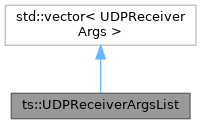
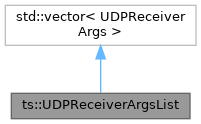
Public Member Functions | |
| void | defineArgs (Args &args, bool with_short_options, bool destination_is_parameter, bool multiple_receivers) |
| bool | loadArgs (Args &args, cn::milliseconds default_receive_timeout=cn::milliseconds(-1)) |
Command line arguments for the class UDPReceiver. On the command line, depending on the application, zero, one, or more, receivers can be specified.
|
inline |
Add command line option definitions in an Args.
| [in,out] | args | Command line arguments to update. |
| [in] | with_short_options | When true, define one-letter short options. |
| [in] | destination_is_parameter | When true, the destination [address:]port is defined as a mandatory parameter. When false, it is defined as option –ip–udp (optional, can be omitted) |
| [in] | multiple_receivers | When true, multiple destination [address:]port are allowed. |
| bool ts::UDPReceiverArgsList::loadArgs | ( | Args & | args, |
| cn::milliseconds | default_receive_timeout = cn::milliseconds(-1) ) |
Load arguments from command line. Must be called after defineArgs(). Args error indicator is set in case of incorrect arguments.
Upon return, the number of elements in this instance depends on defineArgs() parameters:
| destination_is_parameter | multiple_receivers | Number of elements |
|---|---|---|
| true | true | 1 or more |
| true | false | 1 |
| false | true | 0 or more |
| false | false | 0 or 1 |
| [in,out] | args | Command line arguments. |
| [in] | default_receive_timeout | Default receive timeout in milliseconds. No timeout if zero or negative. |
 1.15.0