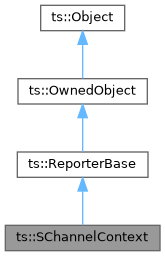
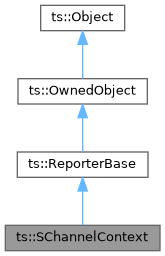
Encapsulate the SChannel context of TLS connection (Windows-specific).
More...
#include <tsSChannelContext.h>
|
| | SChannelContext (ReporterBase *delegate, const TLSConnectionBase ¶ms, Object *owner=nullptr) |
| | Constructor.
|
| |
|
virtual | ~SChannelContext () |
| | Destructor.
|
| |
| bool | eof () const |
| | Check if the input TLS stream is terminated (peer shutdown).
|
| |
| bool | initClient () |
| | Initialize the client side of a connection.
|
| |
| bool | initServer (::PCCERT_CONTEXT cert) |
| | Initialize the server side of a connection.
|
| |
| bool | initShutdown () |
| | Generate a shutdown message to send to the peer.
|
| |
| bool | isOwned () |
| | Check if the object is owned.
|
| |
template<class OBJECT >
requires std::derived_from<OBJECT, ts::Object> |
| bool | isOwned () |
| | Check if the object is owned by an object of a given type.
|
| |
| bool | muteReport (bool mute) |
| | Temporarily mute the associated report.
|
| |
| bool | needReceive () const |
| | Check if more TLS protocol data must be received in order to continue.
|
| |
| bool | needSend () const |
| | Check if some TLS protocol data must be sent.
|
| |
| Object * | owner () |
| | Get the address of the optional "owner" object which was specified in the constructor.
|
| |
template<class OBJECT >
requires std::derived_from<OBJECT, ts::Object> |
| OBJECT * | owner () |
| | Get the address of the "owner" object which was specified in the constructor.
|
| |
| void * | receiveAddress () |
| | Get the address of the input buffer for the TLS protocol data to receive.
|
| |
| bool | receiveCompleted (size_t received_size, ByteBlock &user_data) |
| | Acknowledge the reception of data in the input buffer.
|
| |
| size_t | receiveSize () const |
| | Get the size in bytes of the input buffer for the TLS protocol data to receive.
|
| |
| Report & | report () const |
| | Access the Report which is associated with this object.
|
| |
|
void | reset () |
| | Clear the context, free all resources.
|
| |
| const void * | sendAddress () const |
| | Get the address of the TLS protocol data to send.
|
| |
| bool | sendCompleted () |
| | Acknowledge that the data to send are fully sent.
|
| |
| size_t | sendSize () const |
| | Get the size in bytes of the TLS protocol data to send.
|
| |
| bool | sendUserData (const void *&data, size_t &size) |
| | Send clear user data over the TLS connection.
|
| |
| bool | serverSide () const |
| | Check if this is the server-side of the TLS connection.
|
| |
| Report * | setReport (Report *report) |
| | Associate this object with another Report to log errors.
|
| |
| ReporterBase * | setReport (ReporterBase *delegate) |
| | Associate this object with another ReporterBase to log errors.
|
| |
| bool | shutdowning () const |
| | Check if a TLS shutdown was generated.
|
| |
|
| static int | SilentLevel (bool silent) |
| | Compute a log severity level from a "silent" parameter.
|
| |
Encapsulate the SChannel context of TLS connection (Windows-specific).
No I/O is done in this class. Thus, it can be used in blocking and asynchronous implementation of TLS on Windows.
◆ SChannelContext()
Constructor.
- Parameters
-
| [in] | delegate | Use the report of another ReporterBase. If delegate is null, log messages are discarded. |
| [in] | params | TLS connection parameters. |
| [in] | owner | Optional address of an "owner" object, typically an instance of class containing this object. |
◆ initClient()
| bool ts::SChannelContext::initClient |
( |
| ) |
|
Initialize the client side of a connection.
- Returns
- True on success, false on error.
◆ initServer()
| bool ts::SChannelContext::initServer |
( |
::PCCERT_CONTEXT |
cert | ) |
|
Initialize the server side of a connection.
- Parameters
-
| [in] | cert | Pointer to server certificate. |
- Returns
- True on success, false on error.
◆ serverSide()
| bool ts::SChannelContext::serverSide |
( |
| ) |
const |
|
inline |
Check if this is the server-side of the TLS connection.
- Returns
- True if this is the server-side of the TLS connection.
◆ sendUserData()
| bool ts::SChannelContext::sendUserData |
( |
const void *& |
data, |
|
|
size_t & |
size |
|
) |
| |
Send clear user data over the TLS connection.
Most of the time, this results in a TLS protocol packet to be sent. If the user data are too long, only some of them can be sent in the next TLS protocol packet.
- Parameters
-
| [in,out] | data | Address of the clear user message to sent. On output, it is updated with the length of the actual part of the message which is ready to send. |
| [in,out] | size | Siz in bytes of the clear user message to sent. On output, it is updated with the length of the actual part of the message which is ready to send. |
- Returns
- True on success, false on error.
- See also
- needSend()
◆ needSend()
| bool ts::SChannelContext::needSend |
( |
| ) |
const |
|
inline |
◆ sendAddress()
| const void * ts::SChannelContext::sendAddress |
( |
| ) |
const |
|
inline |
Get the address of the TLS protocol data to send.
- Returns
- The address of the TLS protocol data to send or a null pointer if there is none.
- See also
- needSend()
-
sendSize()
-
sendCompleted()
◆ sendSize()
| size_t ts::SChannelContext::sendSize |
( |
| ) |
const |
|
inline |
◆ sendCompleted()
| bool ts::SChannelContext::sendCompleted |
( |
| ) |
|
Acknowledge that the data to send are fully sent.
- Returns
- True on success, false on error.
◆ needReceive()
| bool ts::SChannelContext::needReceive |
( |
| ) |
const |
|
inline |
Check if more TLS protocol data must be received in order to continue.
- Returns
- True if more TLS protocol data must be received in order to continue.
◆ receiveAddress()
| void * ts::SChannelContext::receiveAddress |
( |
| ) |
|
|
inline |
◆ receiveSize()
| size_t ts::SChannelContext::receiveSize |
( |
| ) |
const |
|
inline |
◆ receiveCompleted()
| bool ts::SChannelContext::receiveCompleted |
( |
size_t |
received_size, |
|
|
ByteBlock & |
user_data |
|
) |
| |
Acknowledge the reception of data in the input buffer.
- Parameters
-
| [in] | received_size | Received size in bytes. |
| [in,out] | user_data | If any clear user data were extracted from the TLS protocol data, they are appended into user_data. |
- Returns
- True on success, false on error.
◆ eof()
| bool ts::SChannelContext::eof |
( |
| ) |
const |
|
inline |
Check if the input TLS stream is terminated (peer shutdown).
- Returns
- True if the input TLS stream is terminated.
◆ initShutdown()
| bool ts::SChannelContext::initShutdown |
( |
| ) |
|
Generate a shutdown message to send to the peer.
- Returns
- True on success, false on error.
◆ shutdowning()
| bool ts::SChannelContext::shutdowning |
( |
| ) |
const |
|
inline |
Check if a TLS shutdown was generated.
- Returns
- True if a TLS shutdown was generated.
◆ report()
| Report & ts::ReporterBase::report |
( |
| ) |
const |
|
inherited |
Access the Report which is associated with this object.
Can be called from another thread only if the Report object is thread-safe.
- Returns
- A reference to the associated report.
◆ setReport() [1/2]
Associate this object with another Report to log errors.
- Parameters
-
| [in] | report | Where to report errors. The report object must remain valid as long as this object exists or setReport() is used with another Report object. If report is null, log messages are discarded. |
- Returns
- The address of the previous Report object or a null pointer if there was none.
◆ setReport() [2/2]
Associate this object with another ReporterBase to log errors.
- Parameters
-
| [in] | delegate | Use the report of another ReporterBase. If delegate is null, the previous explicit Report is used.. |
- Returns
- The address of the previous ReporterBase object or a null pointer if there was none.
◆ muteReport()
| bool ts::ReporterBase::muteReport |
( |
bool |
mute | ) |
|
|
inherited |
Temporarily mute the associated report.
- Parameters
-
| [in] | mute | It true, report() will return a null report (log messages are discarded), until muteReport() is invoked again with mute set to false. |
- Returns
- Previous state of the mute field.
◆ SilentLevel()
| static int ts::ReporterBase::SilentLevel |
( |
bool |
silent | ) |
|
|
inlinestaticinherited |
Compute a log severity level from a "silent" parameter.
Some subclass methods have a "silent" parameter to avoid reporting errors which may be insignificant, typically when closing a device after an error, in which case the close operation may produce other errors if the previous error left the device in an inconsistent state. While those errors should not be displayed as errors, we still display them at debug level.
- Parameters
-
| [in] | silent | If true, do not report errors, report debug messages instead. |
- Returns
- Error when silent is false, Debug otherwise.
◆ owner() [1/2]
| Object * ts::OwnedObject::owner |
( |
| ) |
|
|
inlineinherited |
Get the address of the optional "owner" object which was specified in the constructor.
- Returns
- Address of the "owner" object or a null pointer if there was none.
◆ owner() [2/2]
template<class OBJECT >
requires std::derived_from<OBJECT,
ts::Object>
| OBJECT * ts::OwnedObject::owner |
( |
| ) |
|
|
inherited |
Get the address of the "owner" object which was specified in the constructor.
This template version requires that the owner objet is set and of type OBJECT, or some subclass of it. If there is no owner object or if it is not compatible with the template class OBJECT, this is a fatal error and the application is terminated.
- Template Parameters
-
- Returns
- Address of the "owner" object or a null pointer if there was none.
◆ isOwned() [1/2]
| bool ts::OwnedObject::isOwned |
( |
| ) |
|
|
inlineinherited |
Check if the object is owned.
- Returns
- True if this object has an owner, false otherwise.
◆ isOwned() [2/2]
template<class OBJECT >
requires std::derived_from<OBJECT,
ts::Object>
| bool ts::OwnedObject::isOwned |
( |
| ) |
|
|
inlineinherited |
Check if the object is owned by an object of a given type.
- Template Parameters
-
- Returns
- True if this object has an owner by an object of type OBJECT, false otherwise.
The documentation for this class was generated from the following file:

 1.9.8
1.9.8